Schooling
Unique child-centric curriculum and structured pedagogy
developed by our R&D team comprising leading academicians.

THE KINDERLAND BIG ADVANTAGES
THE KINDERLAND BIG ADVANTAGES For Your Child’s FutureSpacious air-conditioned classrooms
Play areas with developmental games
Prayer Hall
Hygienic washrooms
Trained caregivers
CCTV Cameras
Planned emergency evacuation
THE KINDERLAND ACTIVITIES TO GROW BIG
NCF (National Curriculum Framework)
Playful cognitive exercises
Best in industry Academic & Teacher Training support
Mindful playrooms
Homely ambience
In our free play time we give children opportunity to run, skip, throw, catch, gallop, jump, hop, bend, balance, walk, climb, hang etc.
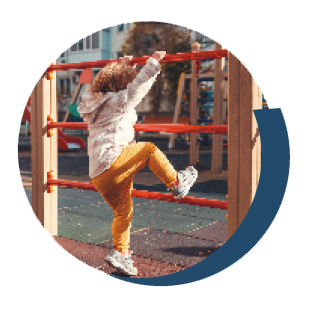
In our free play time we give children opportunity to run, skip, throw, catch, gallop, jump, hop, bend, balance, walk, climb, hang etc.
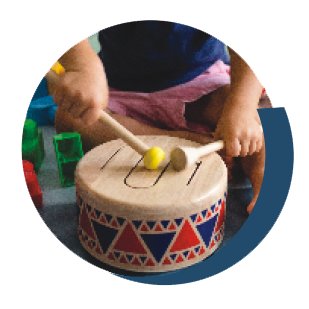
Learning simple nursery rhymes and poems


Reading and story telling sessions by teacher is conducted to develop listening and thinking skills.
Courses @ Kinderland
For thousands of years, philosophers have speculated on the fundamental nature of childhood and the conditions that foster a child’s well-being. We garner them with techniques to make aware the children to begin to explore their environment with a cluster of theme-based contents, stage by stage, that helps them to acclimatize to situational circumstances during their developmental stages of life. Going beyond traditional formulations—providing instant sensorial access to textbooks and materials– the children’s play is documented, as observation of the play gives a lot of information about children’s world, their thoughts, interests, emotions, and experiences. Provision of the earliest support is then passed on when needed. Learning happens when children play and explore together.
Kinder Playgroup Course Activities
Presented in a child safe, colorful and interactive manner to keep the children engaged. All the content is thoughtfully designed to suit the learning requirements of the concerned age group.
Kinder Rosebud
A strong and firm overall foundation in the early years besets the perfect tone that lays the foundation towards moral, social and financial literacy.
Early childhood education is extremely vital for the overall physical and mental development of a child. With the right array of activities and learning environment, we have attuned our set of syllabi particularly matching this age group, that will assist a child securing their learning goals.
In this segment, unlike the earlier years involving the introduction to a subject matter, they are trained to go a little deep into all subjects and acquaint themselves to analyze and broaden their kaleidoscopic horizons. Apart from bestowing the just education in the early years of school, we lay a strong vignette, an early foundation to develop social and emotional bonding and cementing their foundation stone.
Kinder Rosebud Course Activities
Presented in a child safe, colorful and interactive manner to keep the children engaged. All the content is thoughtfully designed to suit the learning requirements of the concerned age group.
Kinder Junior
Emotional developments, early friendships, longer sentences, a stronger memory, new physical skills including reading, creative play, indoor and outdoor play, turn-taking games and perhaps cooking, characterizes the juniors in this age group and distinguishes them from the toddlers. Activities in these age groups, coupled with previous activity, levels up their skills as they are ready in preparation for the next segment of their junior school hood.
From the of entry to Kindergarten until reaching 4 years, there is seen an overall socioemotional development and awareness in the kids. This group is a nourishment towards attaining their overall wellbeing.
Kinder Junior Course Activities
Presented in a child safe, colorful and interactive manner to keep the children engaged. All the content is thoughtfully designed to suit the learning requirements of the concerned age group.
Activities involved
Kinder Senior
Under the new structure of Right to Education and NEP- National Education Policy from state to state, children aged 3 to 8 years come under the foundational section — including three years of pre-school and two years of primary school. The strong base of early learning from age 3 is “aimed at promoting better overall learning, development, and well-being,” according to the NEP.
It is in this accord, that we lay the foundation of this age group; keeping in mind of their needs and also the interest of the parents. In retrospect of the early years, the child’s brain develops at its fastest pace, social and personal habits are formed quickly, the foundation therefore, is laid for the child’s subsequent all-round development here which highlights goals, key concepts or skills, pedagogical processes and early learning outcomes. They are provided with a comprehensive picture of their maturing years and trained emotionally, to step into the real world to higher education.
Kinder Senior Course Activities
Admissions Open. Download our Brochure now.